Oct 5, 2026
Cold Chain Logistics: The Thermal Insulation Power of Honeycomb Paper
Replace EPS foam coolers in cold chain logistics. Discover how honeycomb paper provides excellent thermal insulation, zero plastic tax, and flat-packed savings.
Cold Chain Logistics: The Thermal Insulation Power of Honeycomb Paper
For decades, the cold chain logistics industry—spanning pharmaceuticals, fresh produce, and premium food delivery—has relied heavily on EPS (Expanded Polystyrene) foam coolers. EPS is cheap, lightweight, and offers excellent thermal insulation.
However, in 2026, relying on EPS is a massive commercial liability. With the enforcement of the EU and UK Plastic Packaging Tax, skyrocketing disposal fees, and consumers demanding eco-friendly unboxing experiences, global supply chains are desperately searching for a sustainable alternative.
Can paper truly replace plastic foam in temperature-controlled transit? The answer is yes. Enter Engineered Honeycomb Paper Packaging.
In this guide, we break down the physics of honeycomb paper insulation and why it is becoming the ultimate EPS cooler alternative for modern cold chains.
Executive Summary: The Quick Verdict
- The Problem:EPS foam coolers attract heavy plastic taxes, are impossible to recycle curbside, and cost a fortune in inbound freight because you are shipping "empty air."
- The Solution:FSC®-certified honeycomb paper boards utilize trapped static air to provide exceptional thermal insulation and shock absorption.
- The Maxwell TecX Advantage:Our honeycomb cold chain boxes are shipped flat-packed, maximizing container load efficiency and slashing inbound freight costs by up to 80% while ensuring 100% ESG compliance.
1. The Physics of Insulation: Trapping Dead Air
How does a paper-based product keep goods cold? The secret lies in biomimicry and thermodynamics.
Thermal insulation works by minimizing the transfer of heat. One of the best natural insulators on earth is "dead air" (static, non-moving air).
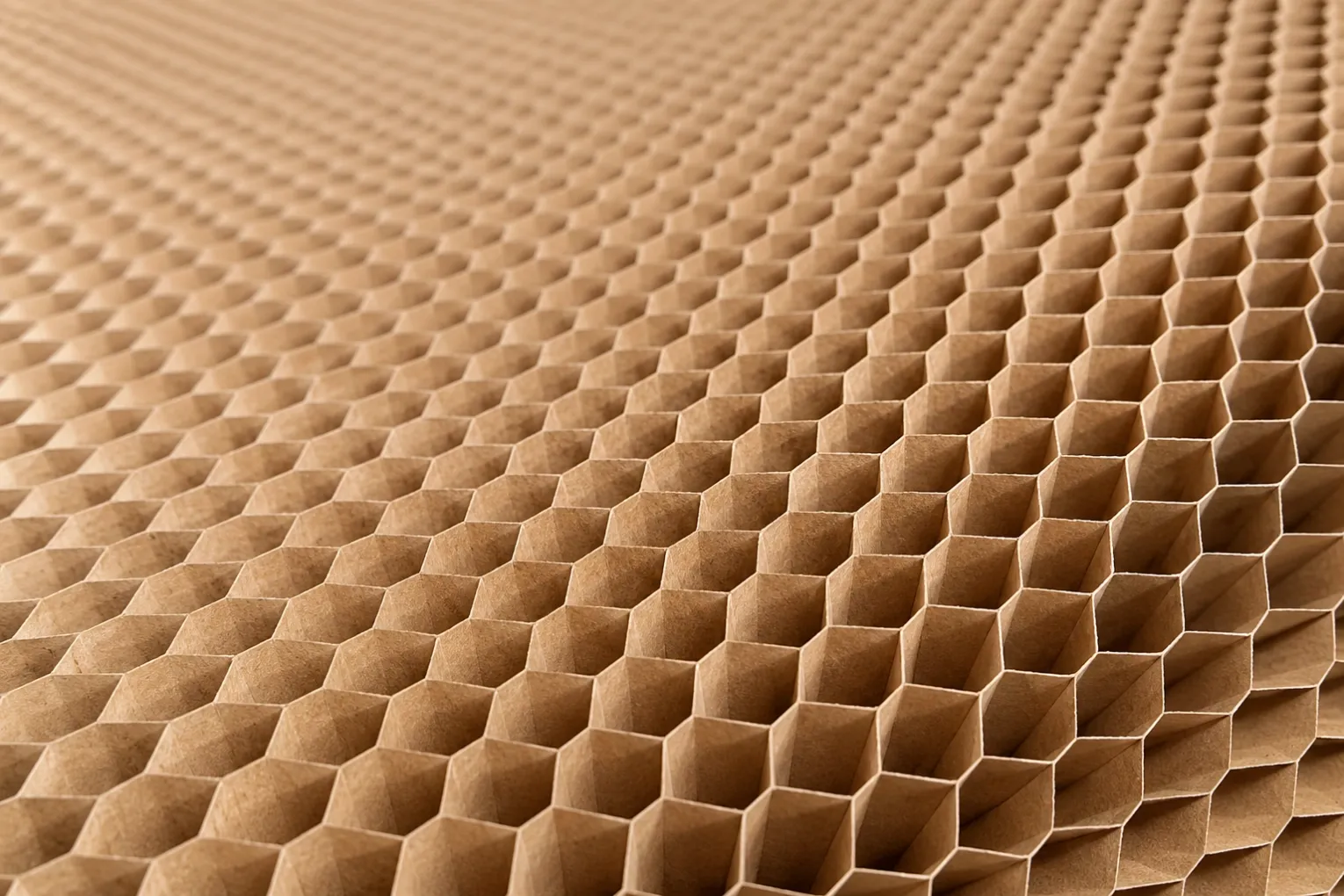
The hexagonal cellular structure of a honeycomb paper core traps thousands of individual pockets of dead air. When this core is sandwiched between two thick layers of kraft paper, it creates a formidable thermal barrier.
Just like a double-paned window uses trapped gas to insulate a house, the thick honeycomb board prevents outside ambient heat from penetrating the box, keeping your gel packs, dry ice, and temperature-sensitive cargo perfectly chilled during 24-to-48-hour transit cycles.
2. Overcoming the Moisture Challenge
The immediate concern packaging engineers have with paper in a cold chain is moisture. Condensation from gel packs or frozen goods can compromise standard cardboard, causing it to collapse.
To solve this, advanced honeycomb paper manufacturers engineer their boards with specialized moisture-resistant kraft liners and eco-friendly water-resistant coatings. When paired with proper internal condensation barriers, the honeycomb box maintains its extreme structural rigidity (vertical crush resistance) even in high-humidity transit environments.
3. The Logistics Hack: Flat-Packed Shipping
The hidden cost of EPS foam coolers is the inbound freight. When a food distributor buys EPS coolers, they are paying ocean or truck freight to ship 98% empty air. A massive warehouse is required just to store the empty coolers before they are even used.
This is where Maxwell TecX completely transforms your supply chain economics.
Our honeycomb paper cold chain boxes are shipped flat-packed. You can fit thousands of flat-packed honeycomb boxes into a single shipping container, compared to just a few hundred pre-molded EPS coolers.
Once at your facility, the boxes are quickly assembled without tools. You eliminate the "shipping air" penalty, drastically lower your landed costs, and free up 90% of your warehouse floor space.
4. 100% Circularity and Zero Plastic Tax
By switching to FSC-certified honeycomb paper, your brand completely bypasses the EU/UK Plastic Packaging Tax.
More importantly, you elevate the end-user experience. Instead of forcing customers to figure out how to dispose of a squeaky, crumbling EPS cooler, they simply flatten the honeycomb box and place it in their standard curbside cardboard recycling bin. It is 100% biodegradable and circular.
Frequently Asked Questions (FAQ)
Q1: Can honeycomb paper boxes maintain temperature for 48 hours?
Yes. When engineered with the correct board thickness (e.g., 20mm to 40mm) and paired with the appropriate refrigerants (gel packs or dry ice), honeycomb boxes consistently pass 24-to-48-hour thermal validation tests for food and pharma delivery.
Q2: Is the honeycomb box strong enough for heavy frozen goods?
Absolutely. The vertical hexagonal structure provides heavy-duty compressive strength, often outperforming EPS foam in drop tests and palletized stacking scenarios.
Conclusion: A Smarter, Greener Cold Chain
Protecting your temperature-sensitive products shouldn't mean paying exorbitant plastic taxes or shipping empty air. By transitioning to engineered honeycomb paper packaging, you secure your cargo, optimize your logistics, and future-proof your brand's ESG commitments.
At Maxwell TecX, we operate a highly efficient dual-entity model, combining our Chinese manufacturing base with global engineering expertise to deliver custom cold chain solutions.